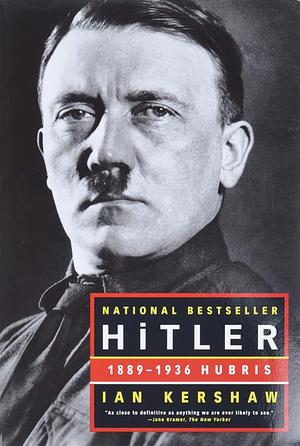
I have spent a lifetime pondering the problem of evil, particularly as it played out in the murderous 20th century. Historians who contend that large structural forces influence events more decisively than do individual actors really have to contend with the example of Adolf Hitler, the personification of evil in our time.
Would World War II have broken out without the driving force of Hitler's twin megalomaniac certainties: that Germany needed more "living space" in Europe and that the war for European domination had to occur in his lifetime because only he had the opportunity and the fortitude to wage it?
Would there have been a Holocaust without the fanatical (and opportunistic) eagerness of his followers to devise ever-more radical solutions to the "Jewish problem" (and thereby curry Hitler's favor)? Years of Hitler's overheated rhetoric and Nazi propaganda had conditioned the German population to see the Jews as a mortal threat (though they never constituted more than 1 percent of the German population) and to look the other way as Europe's Jews disappeared from their midst.
I think the answer to both questions is no, and Ian Kershaw's work argues it convincingly.
I have read a number of books on Hitler, including Alan Bullock's early masterpiece "Hitler: A Study in Tyranny" (1962) and a more recent two-volume study by Volker Ullrich (both of which are excellent), but to my mind Kershaw's life of Hitler stands as the definitive biography. I found myself reading it again 25 years after it first appeared and marveling again at how one man could upend the entire world order based on such malignant fantasies and how he could command the allegiance of millions all the way to their destruction.
Side note: this work originally came out as two volumes, subtitled "Hubris" and "Nemesis," but has subsequently been abridged by the author into one volume (minus about 600 pages of the original). Abridgments are cheating, sort of like listening to only the first and third movements of a Beethoven symphony. Read it in the length it was intended.